
Residential @ The Prestige Place Amenity Categories
The current list is broad. The real test will be which amenities are delivered in each phase and how they are maintained.Club And Leisure
50,000 sq ft clubhouse, mini theatre, amphitheatre, indoor activity spaces. Because both projects sit inside the Prestige Group portfolio, Prestige Avon helps readers separate brand trust from city-specific pricing, location, and possession questions.
Water And Wellness
Swimming pool, infinity pool, spa, sauna, and wellness-oriented recreation.
Sports
Football turf, basketball courts, indoor badminton, walking paths, and active zones.
Daily Support
Pet parks, daycare, work lounges, EV charging, gardens, and convenience-led spaces.
Residential @ The Prestige Place Amenity Highlights
Large amenities can be a strength when they are designed for actual resident use. They can also increase operating costs if the maintenance structure is unclear. Buyers should ask which amenities are registered, which are shared with other township uses, and which are part of later phases.
- Confirm the exact clubhouse size, access rights, and completion timeline.
- Ask whether commercial visitors can access any residential amenity zones.
- Check maintenance estimates for pool, clubhouse, security, gardens, and internal roads.
- Verify sports courts and daycare details in the final brochure or registered plan.
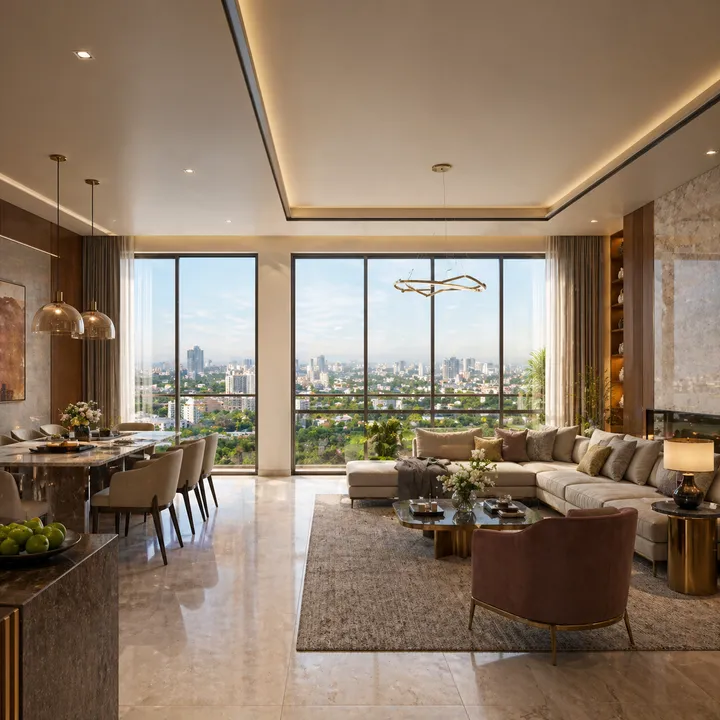
Family Use
Daycare, gardens, walking paths, pet parks, and activity areas can improve day-to-day living if delivered early enough for first-phase residents.
Workday Use
Work lounges and EV charging are useful only if their capacity, booking rules, and residential access are clear.
Sports Use
Courts and turf should be evaluated by size, scheduling policy, location in the site, and night-use rules.
Residential @ The Prestige Place Amenity Analysis
Amenities at Residential @ The Prestige Place need to be evaluated by daily usefulness, delivery timing, maintenance cost, and access control. The current brief lists swimming pool, infinity pool, spa and sauna, football turf, basketball courts, indoor badminton courts, 50,000 sq ft clubhouse, mini theatre, amphitheatre, gardens, walking paths, butterfly gardens, pet parks, EV charging, daycare, and work lounges. That is a strong list, but the final question is how much of it is registered and when it is delivered.
The clubhouse is the headline. A 50,000 sq ft clubhouse can add real value in a large township because it can support indoor games, gym, lounge areas, community events, theatre, and resident services. But buyers should ask whether the clubhouse is exclusive to residential residents, shared across phases, or linked to the wider mixed-use development. Shared access may be fine if managed well, but it changes privacy and maintenance.
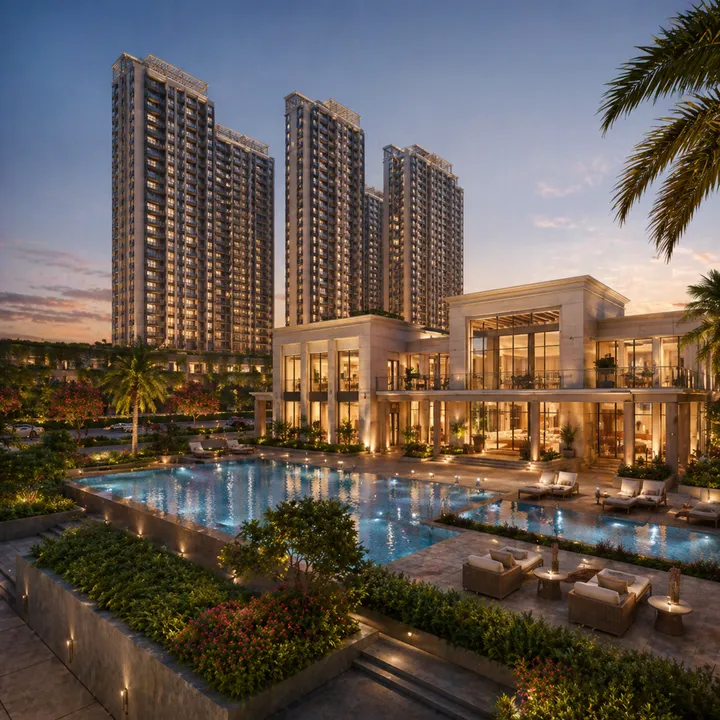
Pools are attractive, but they are also maintenance-heavy. Ask whether the main pool and infinity pool are both part of the first phase, whether there is a separate kids' pool, what the operating hours are, how lifeguard and hygiene protocols work, and whether pool maintenance is included in monthly charges. A pool that looks good in renders must be practical after possession.
Sports amenities need capacity planning. A football turf, basketball court, and indoor badminton courts can support active families, but only if booking systems, lighting, safety, and resident demand are balanced. In a large township, one court can become crowded quickly. Ask how many courts, where they are placed, whether they are floodlit, and whether they are separated from quiet residential zones.
Wellness amenities like spa, sauna, gardens, walking paths, and butterfly gardens can improve lifestyle, especially for families and elderly residents. The walking path is one of the most underrated features. A shaded, safe, continuous walking loop can be used every day. A decorative path broken by roads or parking is less valuable. Ask whether the walking route is continuous and whether it crosses vehicular movement.
Daycare and work lounges are practical urban amenities. They matter for working couples, hybrid professionals, and families with young children. But they need policy clarity. Is daycare operated by a third party? Is it included or paid? Are work lounges bookable? How many seats are available? Are they quiet zones or casual seating? These operational details determine whether residents actually use them.
Pet parks and EV charging show that the project is thinking about modern resident needs. Pet parks need hygiene, enclosure quality, and distance from homes. EV charging needs capacity, billing method, electrical safety, and future expansion. Ask how many charging points are planned and whether residents can install dedicated chargers in their parking slots.
Maintenance is the big caution. A long amenity list can increase monthly outgo. Buyers should ask for estimated maintenance per sq ft, clubhouse charges, sinking fund, corpus, advance maintenance, and whether different product types pay differently. Apartment, villa, and plot residents may use facilities differently, so the cost-sharing formula should be transparent.
Phase-wise delivery is another crucial issue. If apartments are handed over before the clubhouse, pool, or central park is ready, early residents may live with reduced amenities for a period. That can be acceptable if disclosed clearly. Ask for a written amenity delivery schedule and whether possession-linked compensation applies if major amenities are delayed.
The best amenity decision is personal. A buyer with children may value daycare, gardens, and safe walking loops. A frequent traveler may value security, services, and parking. A fitness-focused buyer may care about gym, pool, and sports courts. An investor may care less about every amenity and more about whether the package improves rentability. Rank amenities by actual use, not brochure count.
The safest way to read Residential @ The Prestige Place is to separate project potential from project proof. Potential comes from the Prestige Group name, the Mumbai location story, the 115-acre township positioning, and the apartment, villa, and plot mix. Proof will come from MahaRERA registration, sanctioned drawings, the promoter entity, carpet-area statements, final cost sheet, payment schedule, and the registered list of amenities. Until those documents are visible, my advice is to shortlist with interest but decide with restraint.
This agent-led approach is important because early real estate communication often uses broad corridor names, indicative sizes, and projected prices. Those inputs are helpful for research, but they are not the same as a registered launch. Buyers should keep a note of every claim they care about and ask where it appears in the official document set. If a claim is not in the brochure, RERA record, agreement, or cost sheet, treat it as guidance rather than a binding promise.
Amenity Analysis Checklist
What to verify about the amenity brief before treating any of it as committed.
Document Check
Ask for MahaRERA registration, sanctioned plans, promoter details, legal title, phase boundaries, and the draft agreement before paying any non-refundable amount.
Commercial Check
Compare base price, all-in cost, payment schedule, cancellation terms, maintenance assumptions, and loan availability for the exact unit or product type.
Lifestyle Check
Map the final location, commute, tower or plot position, amenity access, construction phasing, and everyday usability for your household.
Residential @ The Prestige Place Amenity Value
Amenity value depends on usage frequency. A walking path, gym, daycare, work lounge, pool, and basic seating areas may be used weekly or daily. A mini theatre or amphitheatre may be used occasionally. Both can be valuable, but they should not be weighted equally when deciding price.
Families with young children should ask about child-safe zoning, shaded play areas, daycare access, pool supervision, and traffic separation. Elderly residents should ask about walking loops, benches, lighting, ramps, and medical access. Working residents should ask about network quality, work lounge capacity, and quiet spaces.
Maintenance cost should be discussed early. A 50,000 sq ft clubhouse, pools, gardens, sports courts, and security systems require staffing and upkeep. Ask for monthly maintenance estimates and what happens when later phases are added.
Amenity delivery should be written, not verbal. If the clubhouse is promised for a certain phase, ask where that is documented. If pool and sports courts are part of later delivery, understand what first residents receive at possession.
The best amenity package is one that supports everyday life without creating excessive cost. Buyers should choose based on actual use, not the longest amenity list.
From a trust standpoint, the biggest service a real estate agent can provide here is not excitement; it is sequencing. Residential @ The Prestige Place should first be screened for concept fit, then document fit, then budget fit, and only then unit fit. If you reverse that order and fall in love with a render or a starting price, you may miss the legal and commercial questions that protect you.
The practical documents to request are straightforward: MahaRERA registration, sanctioned layout, promoter details, land title summary, phase boundary, carpet-area statement, official price sheet, other charges, payment schedule, cancellation terms, draft agreement, amenity schedule, and construction timeline. Once those are available, compare every sales claim against them.
The local-market question is equally important. Kanjurmarg-Mulund is a credible broad location, but final value will depend on the exact pin, approach road, station access, highway route, future metro influence, and the tenant or end-user catchment around Powai, Vikhroli, Airoli, Mulund, and Thane-side employment.
A strong pre-launch decision is never based on one metric. Brand without documentation is not enough. Low price without good layout is not enough. Amenities without maintenance clarity are not enough. Location without exact access is not enough. The project becomes compelling only when these pieces line up.
This is also why the current pages keep using words like indicative, awaited, expected, planned, and verify. Those words are not weakness. They are accuracy. They help buyers understand what is known today and what must be confirmed before booking.
Residential @ The Prestige Place Final Buyer Notes
My final working rule for Residential @ The Prestige Place is to keep enthusiasm tied to evidence. The project has the right ingredients for a serious Mumbai township conversation: Prestige Group, the Kanjurmarg-Mulund belt, apartment choices, villas, plots, a large land parcel, and a lifestyle-led plan. Those ingredients justify attention. They do not replace verification.
Before booking, build a simple file with every document and every answer. Save the brochure, RERA link, sanctioned plan, cost sheet, unit plan, payment schedule, maintenance estimate, location pin, and written sales communication. Then compare the file with your own priorities: budget, commute, school access, possession timeline, family size, rental expectation, and exit plan. If a priority is not supported by documents, treat it as unresolved.
This approach is especially important for buyers evaluating from outside Mumbai or from overseas. Do not depend only on a phone call or a render. Ask for document-backed answers, schedule a physical or video review, and compare the project with alternatives that are already launched. Residential @ The Prestige Place can remain high on the shortlist, but the final decision should be made only when legal, commercial, planning, and lifestyle evidence align.
One final practical point: the best buyers do not wait passively for launch. They prepare their comparison set early, decide their maximum all-in budget, list non-negotiables, and define what would make them walk away. For Residential @ The Prestige Place, those walk-away points may include unclear RERA status, weak carpet efficiency, excessive launch premium, inconvenient approach road, delayed amenity delivery, or poor separation between residential and mixed-use movement. Writing those limits down before the sales cycle begins helps buyers stay rational when inventory opens.
For final shortlisting, keep the decision evidence-based. A strong project should make sense on paper, on site, and in the numbers. If one of those three checks is weak, slow down and ask for more clarity before moving ahead.
Amenities at a Glance
The amenities named in the current project material, grouped by how you would use them.
Fitness & Wellness
Sports & Recreation
Clubhouse & Community
Safety & Utilities
Residential @ The Prestige Place Amenities FAQs
What amenities are planned at Residential @ The Prestige Place?
The brief lists swimming pools including an infinity pool, spa and sauna, football turf, basketball courts, indoor badminton, a 50,000 sq ft clubhouse, mini theatre, amphitheatre, gardens, walking paths, butterfly gardens, pet parks, EV charging, daycare, and work lounges. Final scope and phase-wise delivery will follow the sanctioned plan.
How large is the clubhouse at Residential @ The Prestige Place?
The brief references a clubhouse footprint of about 50,000 sq ft. Final dimensions, indoor games scope, pool specifications, and access rules will be confirmed in the official brochure and amenity schedule.
Which amenities will be ready at first possession at Residential @ The Prestige Place?
Amenity phasing in a township typically means some facilities come up with the first occupiable phase and others follow in later phases. Ask the project desk for a written phasing schedule so you know what is available on day one of possession.
Will the Residential @ The Prestige Place amenities support daily life or just brochure value?
Pools, walking paths, daycare, work lounges, EV charging, and sports courts affect actual daily living. Decorative or rarely used features should carry less weight in the buying decision than the day-to-day amenities and how they are maintained.
How will maintenance be handled across Residential @ The Prestige Place product formats?
Maintenance assumptions across apartments, villas, and plots need to be checked once the official cost sheet is shared. Ask whether maintenance is sized fairly across formats and how clubhouse and retail components factor into the monthly outflow.
Are EV charging and daycare confirmed amenities at Residential @ The Prestige Place?
Both are referenced in the brief but should be treated as planned rather than guaranteed until they appear in the registered amenity schedule. Confirm scope, count, and access terms in writing before relying on them for your daily plan.