
Residential @ The Prestige Place Project Summary
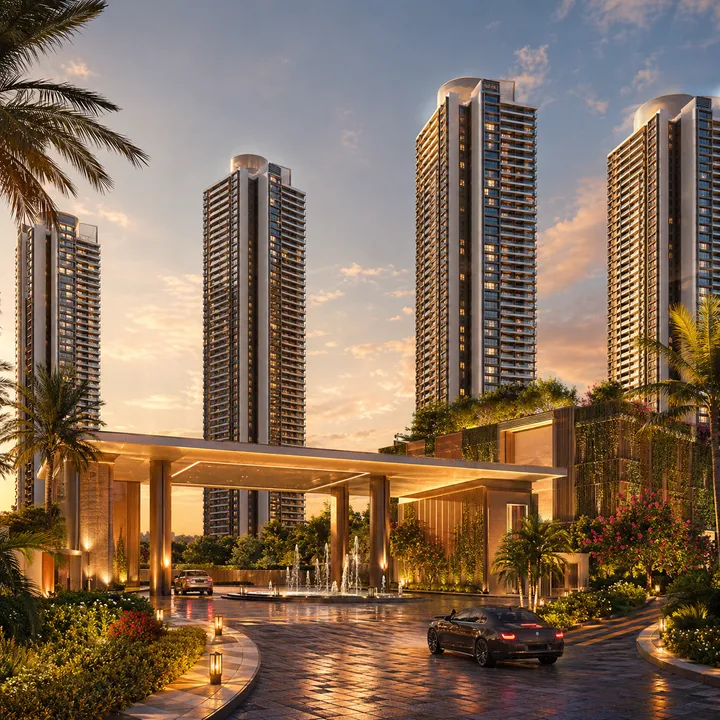
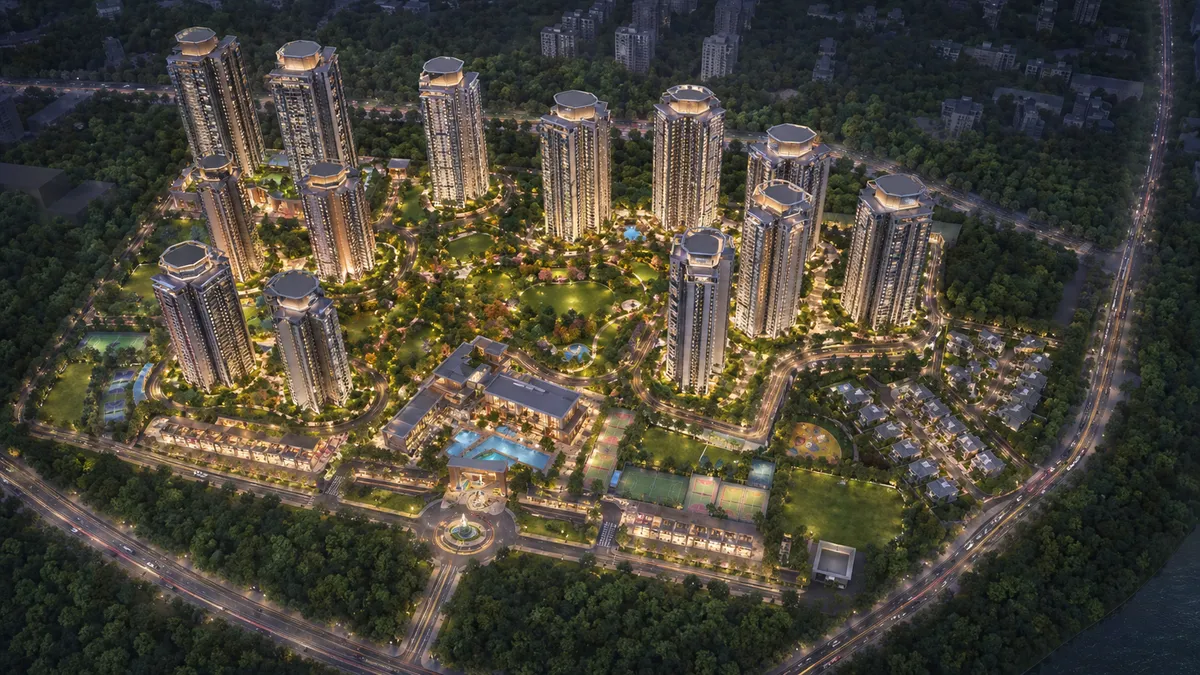
The available source positions the project as a 115-acre township by Prestige Group. It is expected to include 1, 2, 3 and 4 BHK apartments, with villas and plots also referenced as part of the wider residential mix.Residential @ The Prestige Place Builder
The brief identifies Prestige Group as the builder. Prestige is a listed real estate developer with a national portfolio across residential, commercial, retail, hospitality, and mixed-use developments. Buyers should use the official company website and launch documents to verify entity names, land structure, and residential phase details. For a developer-portfolio lens, Prestige Avon is useful because the brand context is shared even though the market, commute pattern, and buyer profile need their own checks.
- Builder name in the brief: Prestige Group.
- Current project phase: pre-launch / upcoming.
- Formal entity, RERA registration, and approval authority are not confirmed in the brief.
Residential @ The Prestige Place Configuration Overview
The apartment mix is expected to range from compact 1 BHK homes to larger 4 BHK apartments. Villas and plots are also mentioned, but their dimensions, phase release, and pricing are on request or not yet disclosed.Apartments
1, 2, 3 and 4 BHK apartment formats are referenced in the brief, with early size estimates only.
Villas
Villas are part of the current positioning, but villa typologies and specifications are not yet confirmed.
Plots
Plots are mentioned as part of the wider township mix. Layout dimensions and building guidelines should be verified later.
Residential @ The Prestige Place Project Status
The project should be treated as pre-launch. That means buyers can research the concept and register interest, but booking decisions should wait for formal documentation.
- RERA ID is not publicly confirmed in the brief.
- Approval authority is not stated in the available material.
- Tower count, floor levels, final unit count, and phase inventory are not confirmed.
- Official pricing and other charges are expected closer to launch.
Residential @ The Prestige Place Agent Overview
Residential @ The Prestige Place is being positioned as a large Prestige Group township in Mumbai's Kanjurmarg-Mulund belt. From a buyer advisory perspective, the scale is the first thing to understand. A 115-acre parcel in this part of Mumbai is not a routine apartment launch. It can create room for internal roads, parks, residential pockets, retail convenience, and multiple housing formats. That is the reason the project is being discussed as a township rather than just another tower project.
The second important point is the mix. The brief references 1, 2, 3, and 4 BHK apartments, plus villas and plots. This matters because each product type attracts a different buyer. A 1 BHK buyer may be looking at entry price and rental demand. A 2 BHK buyer may want a practical city home. A 3 BHK buyer usually cares about family efficiency. A 4 BHK buyer expects premium proportions. Villa and plot buyers will focus on land control, privacy, road width, and development rules. A good overview must hold all these buyer types without pretending the final inventory is already known.
Prestige Group is the core E-E-A-T anchor here. The developer has a national real estate presence and is known across residential, commercial, retail, hospitality, and mixed-use formats. That background supports confidence at the concept stage, but it does not remove the need for project-specific verification. Buyers should still check the exact promoter name, the legal entity registering the residential phase, whether the mixed-use components are under the same or separate entities, and how resident access will be protected.
The current project status remains pre-launch. In practical terms, that means the overview page should not sound like a final sales brochure. Approval authority is not publicly stated in the brief. RERA number is not confirmed. Tower count, floor levels, final unit count, exact address, and official pricing are also not confirmed. A responsible advisor should say that clearly because these are not small details. They shape risk, payment timing, loan eligibility, legal comfort, and future resale confidence.
For an end-user, the project makes most sense if the buyer wants a long-horizon home in a branded township and has flexibility on possession. Prestige has indicated a launch in its financial year 2027-28 and has not announced possession, which means this is not a solution for a family that needs to move within the next few years. It is more suitable for buyers who are planning ahead, upgrading from an existing home, or building a future Mumbai base while continuing to live elsewhere for now.
For an investor, the project should be compared against launched and under-construction options in Mulund, Kanjurmarg, Powai-edge, Vikhroli, and Airoli-linked corridors. The comparison should not stop at starting price. It should include all-in acquisition cost, possession visibility, rental catchment, maintenance assumptions, unit efficiency, and the brand premium at resale. Early-stage entry can work if pricing is disciplined, but it can disappoint if the final cost sheet moves far above the estimate.
The Kanjurmarg-Mulund location story is credible as a broad corridor argument. It has road access through Eastern Express Highway and JVLR, rail references through Kanjurmarg and Mulund, cross-connectivity toward Airoli, and future metro narratives through Lines 4 and 6. But Mumbai location decisions are micro-location decisions. Exact gate, approach road, traffic signal pattern, station access, and internal township movement can change daily convenience.
The township format also introduces questions that a normal apartment project does not. How are residential and commercial visitors separated? Are villa, plot, and apartment residents using the same entry? Which amenities are common to all phases? Is the clubhouse delivered early or only after later phases? Does retail face public traffic or internal resident traffic? Are maintenance charges shared fairly across product formats? These questions should be part of every serious overview discussion.
The strongest reason to track Residential @ The Prestige Place is that it combines brand, scale, and corridor relevance. The strongest reason to wait before booking is that the core legal and commercial documents are not yet final in the available material. Those two points can coexist. A good buyer does not reject the project because it is early, and does not book blindly because it is branded. The right move is to stay ready, collect documents quickly when released, and compare the final numbers with alternatives.
The safest way to read Residential @ The Prestige Place is to separate project potential from project proof. Potential comes from the Prestige Group name, the Mumbai location story, the 115-acre township positioning, and the apartment, villa, and plot mix. Proof will come from MahaRERA registration, sanctioned drawings, the promoter entity, carpet-area statements, final cost sheet, payment schedule, and the registered list of amenities. Until those documents are visible, my advice is to shortlist with interest but decide with restraint.
This agent-led approach is important because early real estate communication often uses broad corridor names, indicative sizes, and projected prices. Those inputs are helpful for research, but they are not the same as a registered launch. Buyers should keep a note of every claim they care about and ask where it appears in the official document set. If a claim is not in the brochure, RERA record, agreement, or cost sheet, treat it as guidance rather than a binding promise.
Agent Overview Checklist
What to verify about the project brief before acting on any of it.
Document Check
Ask for MahaRERA registration, sanctioned plans, promoter details, legal title, phase boundaries, and the draft agreement before paying any non-refundable amount.
Commercial Check
Compare base price, all-in cost, payment schedule, cancellation terms, maintenance assumptions, and loan availability for the exact unit or product type.
Lifestyle Check
Map the final location, commute, tower or plot position, amenity access, construction phasing, and everyday usability for your household.
Residential @ The Prestige Place Market Context
Mumbai buyers do not evaluate townships the same way buyers in lower-density cities do. In Mumbai, land scarcity makes large integrated parcels unusual, and that scarcity is part of the appeal here. The Kanjurmarg-Mulund belt sits in a zone where established neighborhoods, office access, railway movement, and future infrastructure stories overlap. A large Prestige Group township in this belt can create visibility if the final project structure is clean.
At the same time, Mumbai buyers are experienced and price-sensitive. They will compare Residential @ The Prestige Place with launched projects, resale homes, under-construction towers, and premium branded projects nearby. The project must therefore prove more than brand. It must prove usable floor plans, sensible all-in pricing, manageable maintenance, clear possession path, and real location convenience.
The overview should also help NRI and outstation buyers. Many early enquiries for large branded projects come from buyers who cannot visit immediately. For them, document discipline is even more important. Ask for official PDF documents, RERA links, payment schedule, promoter details, allotment terms, and video walkthroughs before transferring any amount.
End users should map their household timeline carefully. Possession has not been announced, so a family with immediate school or commute needs may need an interim plan. If the purchase is for a future upgrade, the wait can be acceptable. The project is not simply good or bad; it is good for the right timeline and risk profile.
The cleanest overview conclusion is this: Residential @ The Prestige Place deserves active tracking because the concept is strong, but it deserves final commitment only after official documents convert the concept into a registered product.
From a trust standpoint, the biggest service a real estate agent can provide here is not excitement; it is sequencing. Residential @ The Prestige Place should first be screened for concept fit, then document fit, then budget fit, and only then unit fit. If you reverse that order and fall in love with a render or a starting price, you may miss the legal and commercial questions that protect you.
The practical documents to request are straightforward: MahaRERA registration, sanctioned layout, promoter details, land title summary, phase boundary, carpet-area statement, official price sheet, other charges, payment schedule, cancellation terms, draft agreement, amenity schedule, and construction timeline. Once those are available, compare every sales claim against them.
The local-market question is equally important. Kanjurmarg-Mulund is a credible broad location, but final value will depend on the exact pin, approach road, station access, highway route, future metro influence, and the tenant or end-user catchment around Powai, Vikhroli, Airoli, Mulund, and Thane-side employment.
A strong pre-launch decision is never based on one metric. Brand without documentation is not enough. Low price without good layout is not enough. Amenities without maintenance clarity are not enough. Location without exact access is not enough. The project becomes compelling only when these pieces line up.
This is also why the current pages keep using words like indicative, awaited, expected, planned, and verify. Those words are not weakness. They are accuracy. They help buyers understand what is known today and what must be confirmed before booking.
Residential @ The Prestige Place Final Buyer Notes
My final working rule for Residential @ The Prestige Place is to keep enthusiasm tied to evidence. The project has the right ingredients for a serious Mumbai township conversation: Prestige Group, the Kanjurmarg-Mulund belt, apartment choices, villas, plots, a large land parcel, and a lifestyle-led plan. Those ingredients justify attention. They do not replace verification.
Before booking, build a simple file with every document and every answer. Save the brochure, RERA link, sanctioned plan, cost sheet, unit plan, payment schedule, maintenance estimate, location pin, and written sales communication. Then compare the file with your own priorities: budget, commute, school access, possession timeline, family size, rental expectation, and exit plan. If a priority is not supported by documents, treat it as unresolved.
This approach is especially important for buyers evaluating from outside Mumbai or from overseas. Do not depend only on a phone call or a render. Ask for document-backed answers, schedule a physical or video review, and compare the project with alternatives that are already launched. Residential @ The Prestige Place can remain high on the shortlist, but the final decision should be made only when legal, commercial, planning, and lifestyle evidence align.
Residential @ The Prestige Place Overview FAQs
How large is Residential @ The Prestige Place as a project?
The available brief positions the project at about 115 acres in the Kanjurmarg-Mulund belt of Mumbai. Tower count, floor levels, density, and final unit count are not confirmed in the brief and will follow the sanctioned plan and MahaRERA filings.
What product mix does the Residential @ The Prestige Place overview cover?
The overview spans 1, 2, 3 and 4 BHK apartments along with villas and plots. Each format needs a different lens - apartment buyers focus on carpet efficiency, villa buyers on land and built-up specifications, and plot buyers on title, dimensions, and building rules.
What stage is Residential @ The Prestige Place currently at?
The project is in the upcoming / pre-launch stage. Approval authority, RERA number, exact address pin, official pricing, and other charges are not confirmed in the available material. Treat the overview as a research base, not a sales brochure.
Why is the Residential @ The Prestige Place overview marked as indicative?
Because launch documentation is still awaited, sizes, prices, possession dates, and amenity references on this page are working information. We prefer flagging fields as awaited rather than treating pre-launch estimates as binding promises.
Who is the buyer profile this overview is meant for?
It is best suited for buyers comfortable with a long-horizon pre-launch to possession cycle and tolerant of evolving details. Families needing immediate possession or near-term rental income should weigh launched alternatives in Mulund, Kanjurmarg, and Powai-edge corridors alongside this option.
What should I cross-check before relying on Residential @ The Prestige Place overview details?
Verify MahaRERA registration, sanctioned plan, promoter entity, exact land title, phase boundaries, carpet-area statement, and amenity schedule before treating the overview as final. The MahaRERA portal and the developer's brochure are the authoritative sources once published.