
Residential @ The Prestige Place Planning Overview
A township of this scale is judged by more than its amenity count. Internal circulation, privacy between residential and mixed-use zones, park placement, entry control, and phase sequencing will shape the everyday experience. For a developer-portfolio lens, Prestige Avon is useful because the brand context is shared even though the market, commute pattern, and buyer profile need their own checks.
- Central green spaces and landscaped walking paths are part of the current positioning.
- Internal roads and residential pockets are expected to support township-style living.
- Retail-led convenience may add value, but residential-commercial separation should be checked.
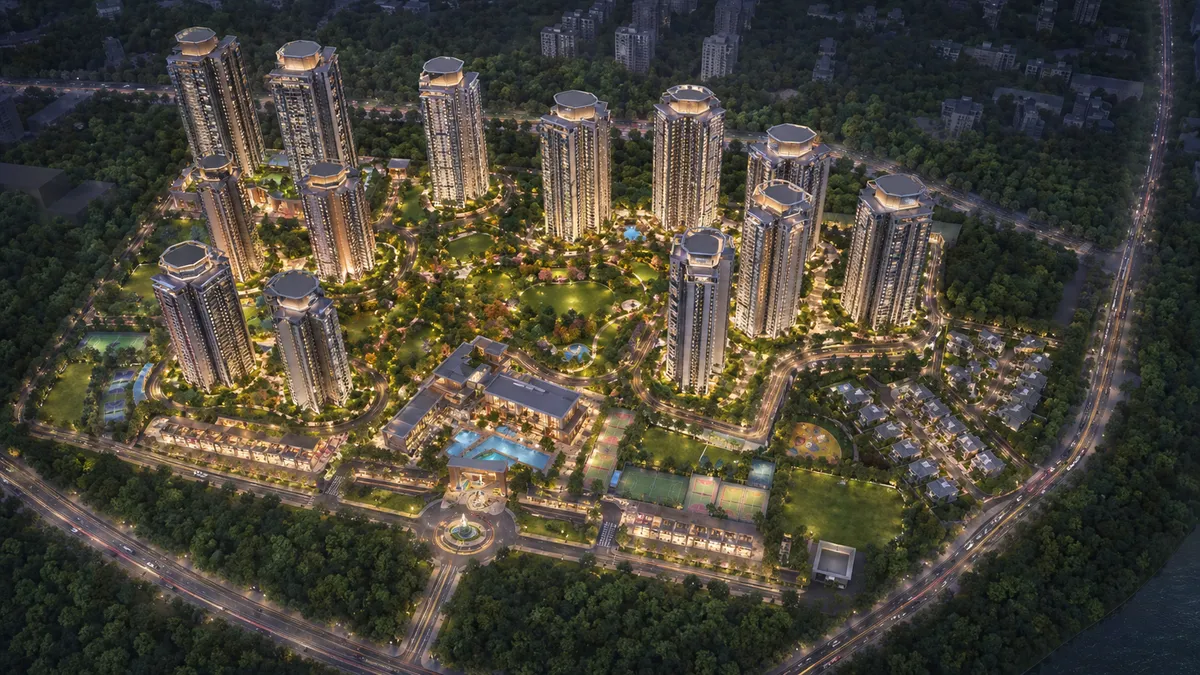
Residential @ The Prestige Place Master Plan Highlights
The current source material gives the township intent, but not the final phase map. These are the points to track when official plans are released.Residential Phase Boundaries
Confirm which land parcels belong to the residential phase and how they are separated from any office, retail, hotel, or high-street components.
Open Space Use
Check whether central parks, gardens, walking paths, pet parks, and sports zones are delivered with the first phase or staged later.
Movement And Access
Ask for approach road width, entry/exit placement, internal road hierarchy, basement or surface parking, visitor flow, and emergency access.
For Apartment Buyers
Check tower orientation, distance between towers, vehicular circulation, amenity adjacency, and whether views face green space, roads, or future development.
For Villa Buyers
Verify villa cluster access, setbacks, privacy, service routes, and clubhouse distance before treating the product as low-density.
For Plot Buyers
Ask for plot dimensions, road width, facing, building rules, utility connection points, and how plot ownership is documented.
Residential @ The Prestige Place Township Planning
The master plan is the most important document in a large township. Residential @ The Prestige Place is described as a 115-acre development with residential pockets, parks, recreation, internal roads, retail-led convenience, apartments, villas, and plots. That promise can create a stronger living environment than a single tower, but only if the final plan handles movement, privacy, access, and phasing well.
The first thing I would study is phase boundaries. In a large project, Phase 1 residents may live with construction activity around them for years. That is normal, but it must be understood. Ask which towers, villas, plots, amenities, roads, and retail components are part of the first residential phase. Ask what is delivered before possession and what is planned later. A master plan that looks complete on a brochure may not be complete when first residents move in.
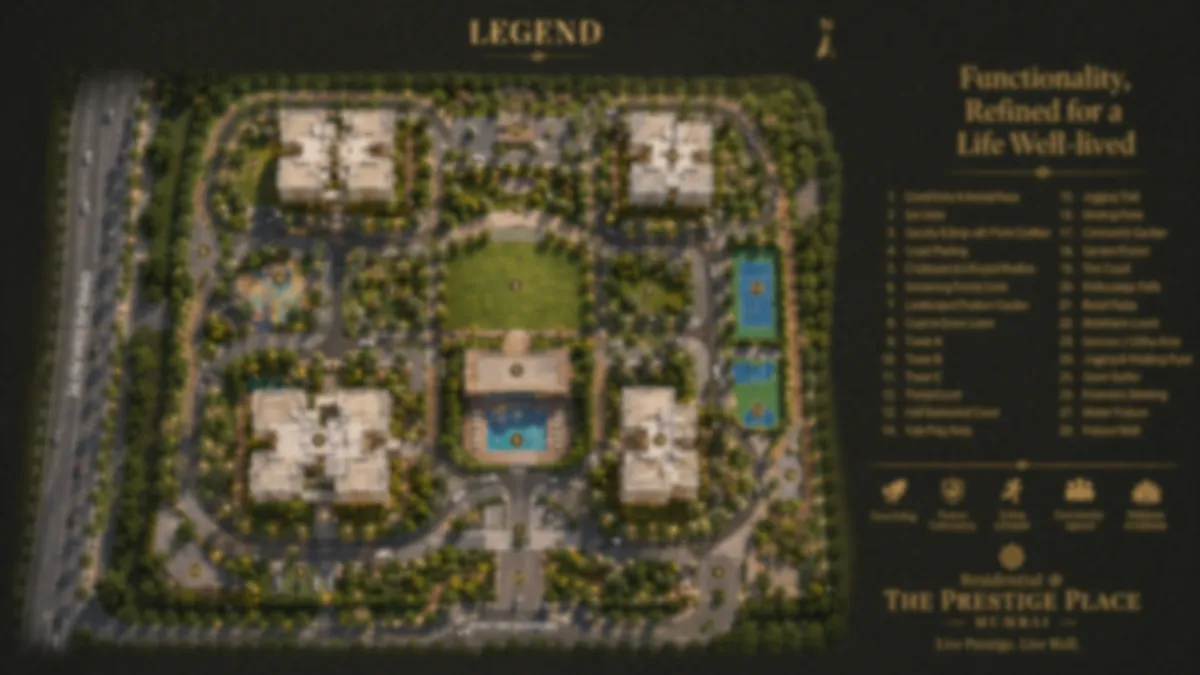
The second point is residential-commercial separation. The brief references a broader mixed-use concept around The Prestige Place brand. Mixed-use can be valuable because retail, office, and hospitality components can improve convenience and visibility. It can also create traffic, visitor movement, and privacy issues if not planned carefully. Ask whether residential entries are separate, whether commercial visitors share internal roads, and whether residential amenities remain private.
Internal road hierarchy matters. In a township, daily comfort depends on how cars, service vehicles, pedestrians, children, and elderly residents move. Wide internal roads are useful only if pedestrian crossings, drop-off points, basement entries, and service areas are sensibly placed. If every resident route crosses retail traffic or construction traffic, the township can feel less private than expected.
Open-space quality is not just a percentage. Buyers should ask where the open spaces are, who can access them, how they are shaded, whether walking paths create meaningful loops, and whether parks are separated from vehicular movement. A central green that is easy to reach and safe to use daily is more valuable than decorative leftover landscaping near boundaries.
Amenity adjacency is another key test. A clubhouse too far from first-phase towers may be inconvenient. A pool too close to residences may create noise. Sports courts near quiet residential pockets may affect evening comfort. Daycare, work lounges, and pet parks need access control. The right master plan balances energy and privacy.
Apartment, villa, and plot zones should be studied separately. Apartment residents may want fast lift access, basement parking, and close amenities. Villa residents may expect quieter roads and more privacy. Plot buyers may care about road width, frontage, development rules, and individual utility connections. If all product types are included, the master plan must ensure one format does not compromise another.
Parking and service movement can define long-term experience. Ask whether parking is basement, podium, surface, or mixed. Ask where visitor parking sits. Ask how delivery vehicles enter. Ask where garbage collection, electrical rooms, water tanks, and service yards are placed. Buyers often ignore these technical pieces during launch, but residents feel them every day after possession.
The sanctioned plan should be compared with the marketing master plan. Look for differences in open-space position, road widths, building footprints, amenity placement, phase lines, and reserved areas. If there is a difference, the sanctioned plan matters. The brochure helps you understand the story; the approval drawing tells you what is legally planned.
My advice is to treat the current master plan visual as a conversation starter. It is useful for understanding the township ambition, but it should not be the basis for payment. The final decision should come after reviewing sanctioned drawings, MahaRERA uploads, amenity schedule, and legal documents for the residential phase you are buying into.
The safest way to read Residential @ The Prestige Place is to separate project potential from project proof. Potential comes from the Prestige Group name, the Mumbai location story, the 115-acre township positioning, and the apartment, villa, and plot mix. Proof will come from MahaRERA registration, sanctioned drawings, the promoter entity, carpet-area statements, final cost sheet, payment schedule, and the registered list of amenities. Until those documents are visible, my advice is to shortlist with interest but decide with restraint.
This agent-led approach is important because early real estate communication often uses broad corridor names, indicative sizes, and projected prices. Those inputs are helpful for research, but they are not the same as a registered launch. Buyers should keep a note of every claim they care about and ask where it appears in the official document set. If a claim is not in the brochure, RERA record, agreement, or cost sheet, treat it as guidance rather than a binding promise.
Township Planning Checklist
What to verify about the township plan before treating the phasing as fixed.
Document Check
Ask for MahaRERA registration, sanctioned plans, promoter details, legal title, phase boundaries, and the draft agreement before paying any non-refundable amount.
Commercial Check
Compare base price, all-in cost, payment schedule, cancellation terms, maintenance assumptions, and loan availability for the exact unit or product type.
Lifestyle Check
Map the final location, commute, tower or plot position, amenity access, construction phasing, and everyday usability for your household.
Residential @ The Prestige Place Township Risk And Reward
The reward of a township is lifestyle control. If planned well, residents get internal greens, safer movement, amenity access, retail convenience, and a stronger community identity. The risk is complexity. More land, more phases, more product types, and possible mixed-use components create more questions.
Construction phasing is one of the biggest risks. Early residents may get attractive pricing but live near ongoing work. Ask which roads, towers, amenities, and landscape areas will be complete at first possession. Also ask what temporary arrangements will exist during later construction.
Security planning should be reviewed in detail. A township with public-facing retail or office spaces must protect residential privacy. Ask whether visitor parking, delivery movement, commercial entry, and resident entry are separated.
Open space should be usable across age groups. Children need safe play zones. Elderly residents need shaded walking paths. Working adults need quiet pockets. Pet owners need dedicated areas. A good master plan makes these groups coexist without conflict.
Finally, ask how ownership and maintenance are structured across apartments, villas, and plots. If different product types share amenities, the cost-sharing model must be clear from the beginning.
From a trust standpoint, the biggest service a real estate agent can provide here is not excitement; it is sequencing. Residential @ The Prestige Place should first be screened for concept fit, then document fit, then budget fit, and only then unit fit. If you reverse that order and fall in love with a render or a starting price, you may miss the legal and commercial questions that protect you.
The practical documents to request are straightforward: MahaRERA registration, sanctioned layout, promoter details, land title summary, phase boundary, carpet-area statement, official price sheet, other charges, payment schedule, cancellation terms, draft agreement, amenity schedule, and construction timeline. Once those are available, compare every sales claim against them.
The local-market question is equally important. Kanjurmarg-Mulund is a credible broad location, but final value will depend on the exact pin, approach road, station access, highway route, future metro influence, and the tenant or end-user catchment around Powai, Vikhroli, Airoli, Mulund, and Thane-side employment.
A strong pre-launch decision is never based on one metric. Brand without documentation is not enough. Low price without good layout is not enough. Amenities without maintenance clarity are not enough. Location without exact access is not enough. The project becomes compelling only when these pieces line up.
This is also why the current pages keep using words like indicative, awaited, expected, planned, and verify. Those words are not weakness. They are accuracy. They help buyers understand what is known today and what must be confirmed before booking.
Residential @ The Prestige Place Final Buyer Notes
My final working rule for Residential @ The Prestige Place is to keep enthusiasm tied to evidence. The project has the right ingredients for a serious Mumbai township conversation: Prestige Group, the Kanjurmarg-Mulund belt, apartment choices, villas, plots, a large land parcel, and a lifestyle-led plan. Those ingredients justify attention. They do not replace verification.
Before booking, build a simple file with every document and every answer. Save the brochure, RERA link, sanctioned plan, cost sheet, unit plan, payment schedule, maintenance estimate, location pin, and written sales communication. Then compare the file with your own priorities: budget, commute, school access, possession timeline, family size, rental expectation, and exit plan. If a priority is not supported by documents, treat it as unresolved.
This approach is especially important for buyers evaluating from outside Mumbai or from overseas. Do not depend only on a phone call or a render. Ask for document-backed answers, schedule a physical or video review, and compare the project with alternatives that are already launched. Residential @ The Prestige Place can remain high on the shortlist, but the final decision should be made only when legal, commercial, planning, and lifestyle evidence align.
One final practical point: the best buyers do not wait passively for launch. They prepare their comparison set early, decide their maximum all-in budget, list non-negotiables, and define what would make them walk away. For Residential @ The Prestige Place, those walk-away points may include unclear RERA status, weak carpet efficiency, excessive launch premium, inconvenient approach road, delayed amenity delivery, or poor separation between residential and mixed-use movement. Writing those limits down before the sales cycle begins helps buyers stay rational when inventory opens.
For final shortlisting, keep the decision evidence-based. A strong project should make sense on paper, on site, and in the numbers. If one of those three checks is weak, slow down and ask for more clarity before moving ahead.
A buyer should also revisit this page after every new document release. Pre-launch information improves in stages, and each new brochure, plan, or price update can change the recommendation. Treat the first version as research and the final registered version as the decision point.
Residential @ The Prestige Place Master Plan FAQs
What is the master plan footprint at Residential @ The Prestige Place?
The project is positioned on about 115 acres in the Kanjurmarg-Mulund belt. Tower placement, internal road network, phase boundaries, and final density per acre will follow the sanctioned plan once MahaRERA filings are public.
How is the township planned at Residential @ The Prestige Place?
The brief describes township-style planning with homes, parks, internal roads, recreation areas, and retail-led convenience. Large central green spaces and landscaped walking areas are part of the current positioning, with the sanctioned layout still awaited.
Will villa, plot, and apartment zones share the same access at Residential @ The Prestige Place?
Internal access design, including whether villa, plot, and apartment residents share the same entry or have separated routes, is not confirmed in the available material. This is a critical question to ask the sales team and to verify against the sanctioned master plan.
How does phasing work in the Residential @ The Prestige Place master plan?
Phase boundaries, amenity delivery schedule, emergency access, and parking strategy will be defined in the registered master plan. Buyers should ask which residential phase releases first and how subsequent phases connect to the same amenity backbone.
Why does the master plan matter more than the apartment render here?
In a township of this scale, the master plan governs how vehicles move, where open spaces sit, and how far homes are from amenities. Even a strong unit plan can feel compromised if tower placement, entry sequence, or internal roads are weak - so the sanctioned layout deserves close scrutiny.
When will the Residential @ The Prestige Place master plan be finalised publicly?
The sanctioned master plan and MahaRERA-registered approved plan are the formal references. Both are awaited at this stage, alongside the project's RERA registration and approval authority detail.