
Residential @ The Prestige Place Photos
Use the gallery to understand the intended lifestyle and planning tone, then verify actual deliverables against the formal brochure and registered plans.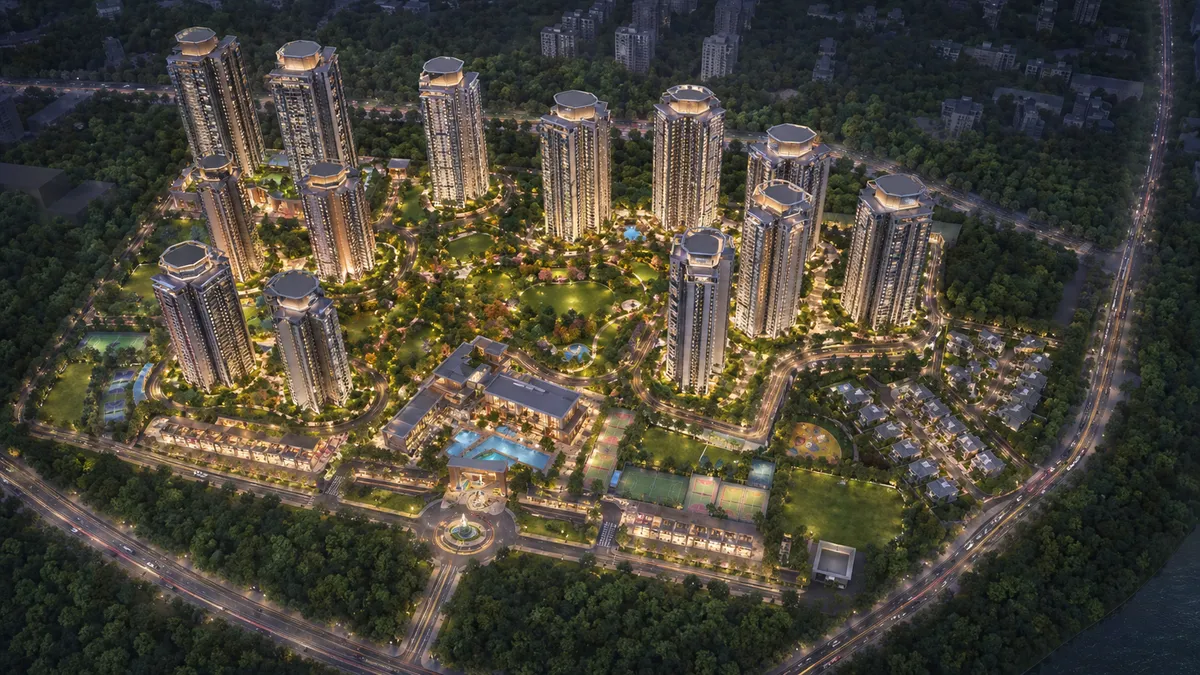

What The Gallery Shows
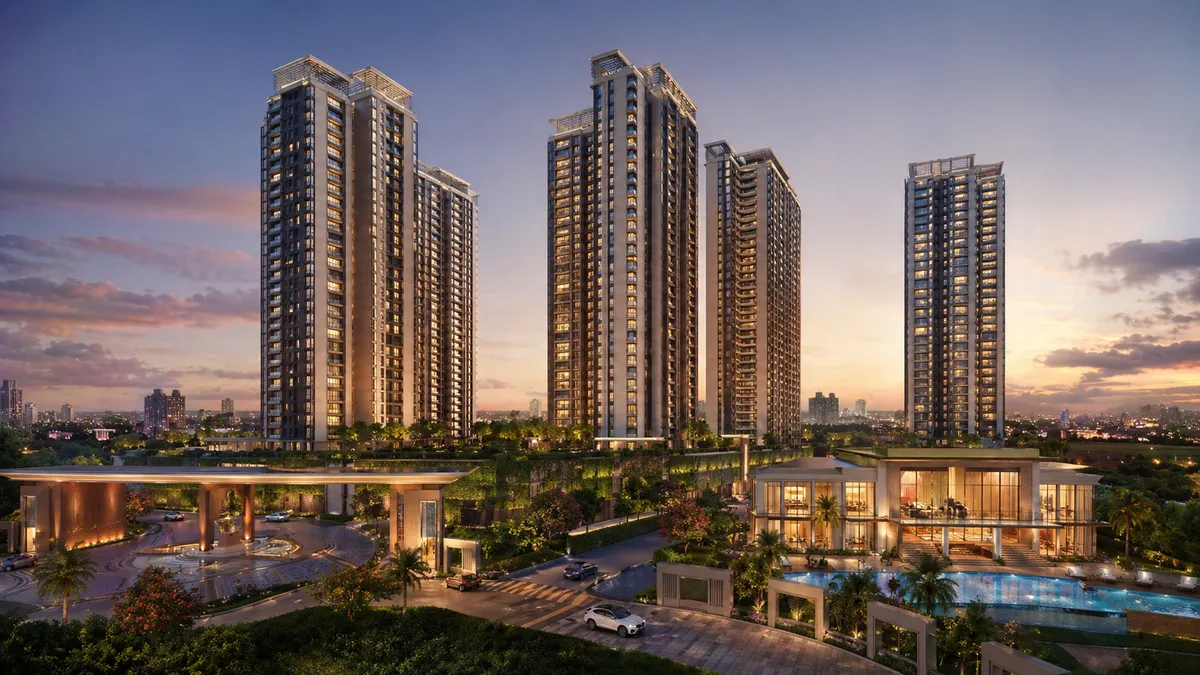
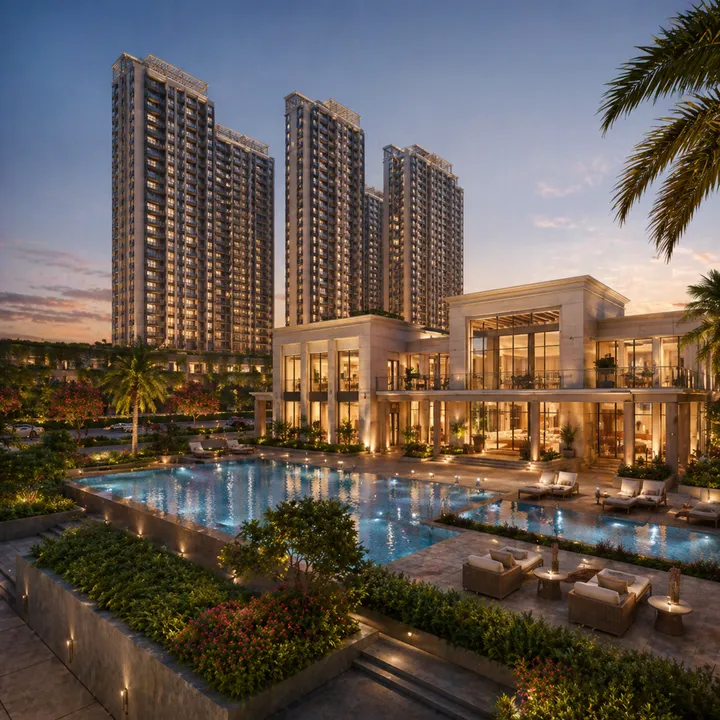
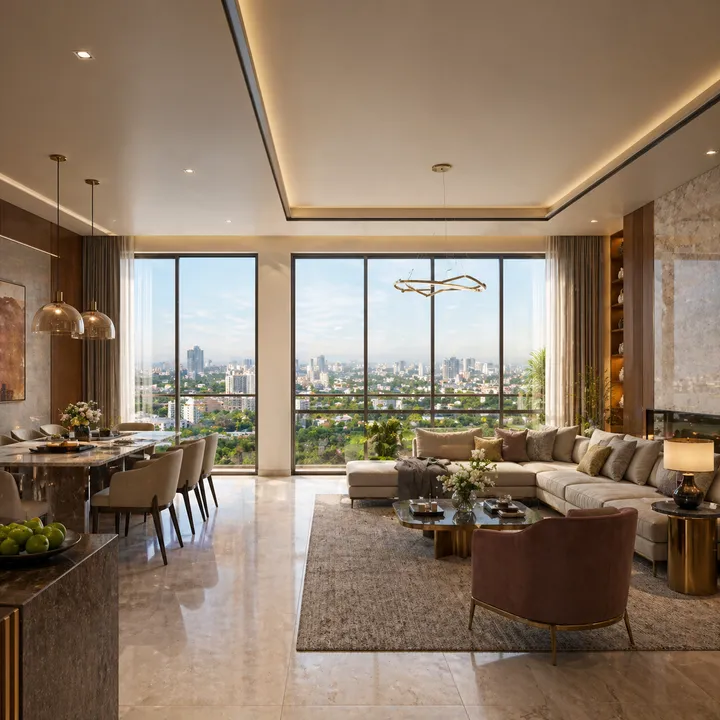
The strongest signal is township scale. The visuals focus on elevation, arrival, amenity, interiors, and master planning rather than a single tower identity. Because both projects sit inside the Prestige Group portfolio, Prestige Avon helps readers separate brand trust from city-specific pricing, location, and possession questions.
What It Cannot Confirm
Gallery images do not confirm approvals, RERA registration, exact specifications, final layout, or what is included in the first phase.
How To Use It
Compare the final brochure and registered drawings against these visuals before relying on any design promise.
Residential @ The Prestige Place Gallery Interpretation
A gallery page should not be treated as decoration. For Residential @ The Prestige Place, the images are part of the buyer's first impression: elevation, aerial view, entry, clubhouse, living room, bedroom, and master plan. As an agent, I use these visuals to understand the developer's intended positioning, but I never use them as proof of final specifications.
The elevation image tells you the architectural direction. It suggests how the project wants to appear from outside: premium, organized, and contemporary. What it does not confirm is the final facade material, balcony treatment, tower height, floor count, or exact view from any unit. When the official brochure is released, compare the elevation render with technical specifications and tower drawings.
The aerial view is useful because it communicates scale. In a 115-acre township, scale is a real selling point if it translates into better spacing, roads, open areas, and amenity distribution. But an aerial render can also make a project look more open than it feels on the ground. Ask for actual phase plans, tower distances, future development zones, and the construction sequence before judging openness.
The entry visual matters because arrival shapes resident perception. A good entry should manage visitor checks, resident access, service movement, and peak-hour traffic without feeling crowded. The render may show a polished gateway, but the operational questions are practical: how many lanes, where is security, where do app cabs wait, where do delivery vehicles queue, and how far is the entry from the main road?
The clubhouse image supports the lifestyle story. The brief mentions a 50,000 sq ft clubhouse along with pools, sports, theatre, amphitheatre, wellness, daycare, EV charging, work lounges, and gardens. That sounds strong, but the gallery cannot confirm what is delivered in Phase 1. Ask for a registered amenity schedule and completion timeline. A clubhouse is valuable only when it is built, accessible, maintained, and appropriately sized for residents.
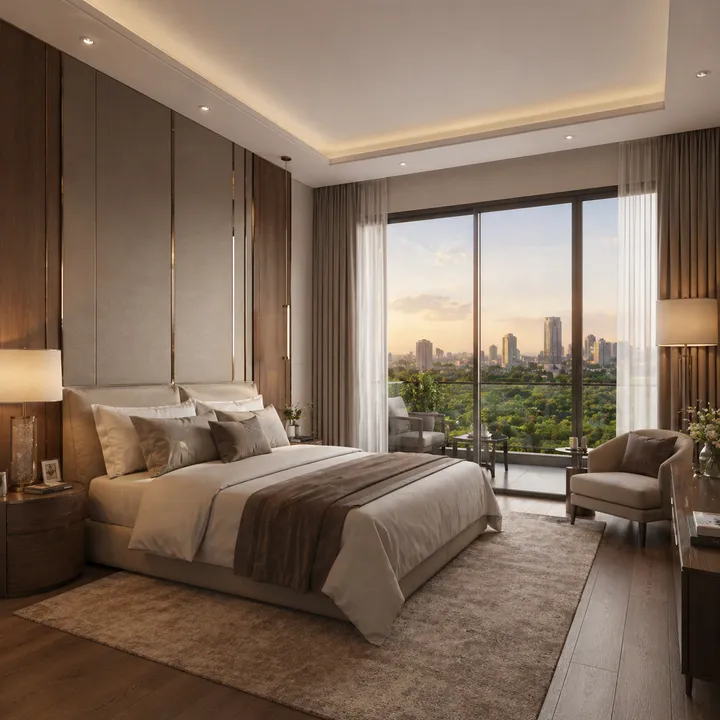
The living room and bedroom visuals help buyers imagine interiors, but they are not specification sheets. Interior renders often use furniture, lighting, ceiling heights, and styling that may not be part of the standard apartment. Ask which finishes are included: flooring, kitchen counter, bathroom fittings, switches, windows, doors, locks, and power backup. If the brief mentions premium specifications, verify brands and exact scope in the final document.
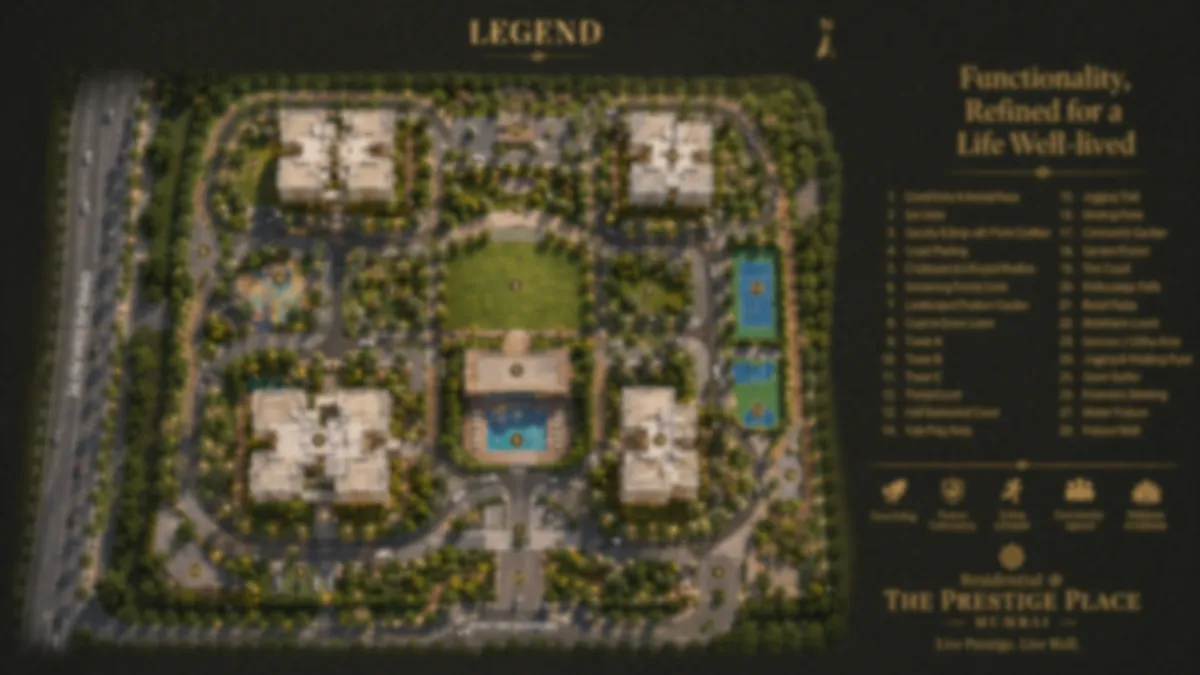
The master plan visual is the most functional image in the gallery. It should be read with questions: where are towers, villas, plots, amenities, roads, green zones, and retail components? How are pedestrians protected? Which views are likely to remain open? Which areas may see future construction? The visual is useful, but the sanctioned plan is the document that matters.
Buyers should also watch for image disclaimers in the official brochure. Phrases such as artist impression, indicative image, subject to change, proposed, or conceptual are common. They are not necessarily red flags, but they tell you what is not binding. If a visual feature is important to your decision, ask where it appears in the registered plan, specification sheet, or agreement.
When comparing Residential @ The Prestige Place with other Mumbai launches, use gallery images to judge positioning, not value. Value depends on final price, carpet area, location, delivery, legal clarity, and maintenance. A beautiful render at an inflated all-in cost may not be better than a simpler project with stronger documentation. Conversely, a strong branded township can justify a premium if the final documents match the visual promise.
The gallery should finally lead to a site-visit mindset. When the project opens for visits, carry the visuals with you and compare them against the sales model, approach road, surrounding infrastructure, sample flat, and displayed plans. Ask what is confirmed, what is proposed, and what is illustrative. That is how a buyer turns images into due diligence.
The safest way to read Residential @ The Prestige Place is to separate project potential from project proof. Potential comes from the Prestige Group name, the Mumbai location story, the 115-acre township positioning, and the apartment, villa, and plot mix. Proof will come from MahaRERA registration, sanctioned drawings, the promoter entity, carpet-area statements, final cost sheet, payment schedule, and the registered list of amenities. Until those documents are visible, my advice is to shortlist with interest but decide with restraint.
This agent-led approach is important because early real estate communication often uses broad corridor names, indicative sizes, and projected prices. Those inputs are helpful for research, but they are not the same as a registered launch. Buyers should keep a note of every claim they care about and ask where it appears in the official document set. If a claim is not in the brochure, RERA record, agreement, or cost sheet, treat it as guidance rather than a binding promise.
Gallery Interpretation Checklist
What to verify about the visuals before reading them as the finished product.
Document Check
Ask for MahaRERA registration, sanctioned plans, promoter details, legal title, phase boundaries, and the draft agreement before paying any non-refundable amount.
Commercial Check
Compare base price, all-in cost, payment schedule, cancellation terms, maintenance assumptions, and loan availability for the exact unit or product type.
Lifestyle Check
Map the final location, commute, tower or plot position, amenity access, construction phasing, and everyday usability for your household.
Residential @ The Prestige Place Gallery Inspection Method
When I review project images with buyers, I mark each image with three labels: confirmed, indicative, and unknown. Confirmed means the feature appears in an official document. Indicative means it appears as a concept or render. Unknown means it looks implied but has not been documented. This simple method prevents buyers from mistaking mood images for legal commitments.
For the elevation image, ask what facade material is specified. For the entry image, ask how the gate functions during peak hours. For interior images, ask what finishes are standard. For clubhouse images, ask whether furniture, equipment, and operating areas are included. For master plan images, ask whether the layout matches sanctioned drawings.
Buyers should also compare image quality with specification quality. A premium-looking bedroom render does not matter if the apartment has weak storage or poor ventilation. A dramatic clubhouse render does not matter if it is delivered late. A green aerial render does not matter if future phases block the view.
Gallery pages are most useful when combined with site visits. Once the project opens for visits, take screenshots of the visuals and ask the sales team to identify where each feature appears in the plan. This makes the conversation specific.
The final brochure should also be checked for disclaimers. Most real estate images contain disclaimers, but the wording matters. If everything is subject to change, rely more heavily on RERA documents and technical specifications.
From a trust standpoint, the biggest service a real estate agent can provide here is not excitement; it is sequencing. Residential @ The Prestige Place should first be screened for concept fit, then document fit, then budget fit, and only then unit fit. If you reverse that order and fall in love with a render or a starting price, you may miss the legal and commercial questions that protect you.
The practical documents to request are straightforward: MahaRERA registration, sanctioned layout, promoter details, land title summary, phase boundary, carpet-area statement, official price sheet, other charges, payment schedule, cancellation terms, draft agreement, amenity schedule, and construction timeline. Once those are available, compare every sales claim against them.
The local-market question is equally important. Kanjurmarg-Mulund is a credible broad location, but final value will depend on the exact pin, approach road, station access, highway route, future metro influence, and the tenant or end-user catchment around Powai, Vikhroli, Airoli, Mulund, and Thane-side employment.
A strong pre-launch decision is never based on one metric. Brand without documentation is not enough. Low price without good layout is not enough. Amenities without maintenance clarity are not enough. Location without exact access is not enough. The project becomes compelling only when these pieces line up.
This is also why the current pages keep using words like indicative, awaited, expected, planned, and verify. Those words are not weakness. They are accuracy. They help buyers understand what is known today and what must be confirmed before booking.
Residential @ The Prestige Place Final Buyer Notes
My final working rule for Residential @ The Prestige Place is to keep enthusiasm tied to evidence. The project has the right ingredients for a serious Mumbai township conversation: Prestige Group, the Kanjurmarg-Mulund belt, apartment choices, villas, plots, a large land parcel, and a lifestyle-led plan. Those ingredients justify attention. They do not replace verification.
Before booking, build a simple file with every document and every answer. Save the brochure, RERA link, sanctioned plan, cost sheet, unit plan, payment schedule, maintenance estimate, location pin, and written sales communication. Then compare the file with your own priorities: budget, commute, school access, possession timeline, family size, rental expectation, and exit plan. If a priority is not supported by documents, treat it as unresolved.
This approach is especially important for buyers evaluating from outside Mumbai or from overseas. Do not depend only on a phone call or a render. Ask for document-backed answers, schedule a physical or video review, and compare the project with alternatives that are already launched. Residential @ The Prestige Place can remain high on the shortlist, but the final decision should be made only when legal, commercial, planning, and lifestyle evidence align.
One final practical point: the best buyers do not wait passively for launch. They prepare their comparison set early, decide their maximum all-in budget, list non-negotiables, and define what would make them walk away. For Residential @ The Prestige Place, those walk-away points may include unclear RERA status, weak carpet efficiency, excessive launch premium, inconvenient approach road, delayed amenity delivery, or poor separation between residential and mixed-use movement. Writing those limits down before the sales cycle begins helps buyers stay rational when inventory opens.
For final shortlisting, keep the decision evidence-based. A strong project should make sense on paper, on site, and in the numbers. If one of those three checks is weak, slow down and ask for more clarity before moving ahead.
A buyer should also revisit this page after every new document release. Pre-launch information improves in stages, and each new brochure, plan, or price update can change the recommendation. Treat the first version as research and the final registered version as the decision point. This keeps the gallery useful without overstating certainty for buyers right now.
Residential @ The Prestige Place Gallery FAQs
What does Residential @ The Prestige Place look like today?
The gallery shows working visuals of the intended elevation, entry experience, clubhouse, interiors, master plan concept, and aerial township scale. These visuals reflect concept intent rather than final delivered specifications.
Are the Residential @ The Prestige Place gallery images final renders?
No - the images are concept references built around the current brief. Final elevations, finishes, and interior specifications will be locked through the official brochure and any sample-home walkthrough closer to launch.
How should I read the Residential @ The Prestige Place visuals correctly?
Use the elevation to understand architectural intent, the entry visual for arrival language, the clubhouse and interior shots for lifestyle positioning, and the aerial and master plan visuals for township scale. None of these images by themselves prove specifications or amenity scope.
Can I visit Residential @ The Prestige Place to see the site in person?
Site visits are typically arranged through the project desk. Use the contact form to request a slot; the exact gate pin, approach road, and ground status will be shared at booking time.
Will there be a sample home or experience centre at Residential @ The Prestige Place?
A sample home or experience centre is typically opened around the formal launch. Until then, the gallery and concept renders are the visual reference. Confirm sample-home availability with the project desk before planning a visit.
How do the Residential @ The Prestige Place gallery images compare with the final brochure?
When the official brochure is released, compare it against the current gallery for room dimensions, material specifications, clubhouse access rules, phasing notes, and disclaimers. Treat anything not in the contractual document as indicative.